
Across the world, species are disappearing at alarming rates, and scientists continue to warn that we are living through a twin crisis of climate change and biodiversity loss.
Now, a new international report is sounding the alarm: the global economy depends on nature, and the rapid loss of biodiversity is putting that foundation at risk. If businesses and governments fail to act quickly, nature’s decline will accelerate and the consequences will be irreversible.
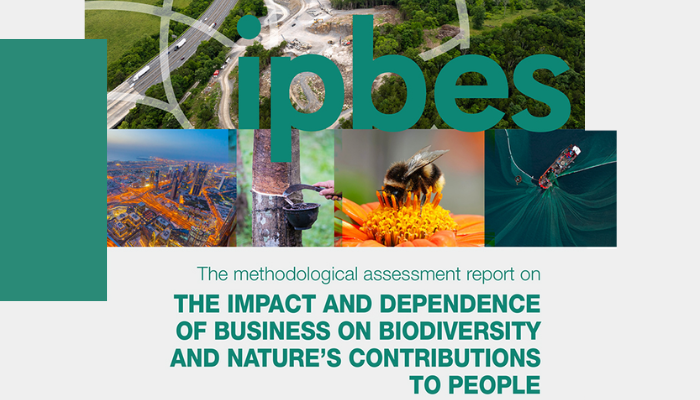
Released in February by the Intergovernmental Science-Policy Platform on Biodiversity and Ecosystem Services (IPBES), the Business and Biodiversity Assessment focuses on how businesses impact and depend on nature. Developed through the research of leading scientists and experts, the assessment sends a clear message that without major changes to the way economies operate, biodiversity loss will worsen, risking ecosystems and the long-term resilience of our communities and economy.
For countries like Canada, where much of the economy is rooted in natural resources, biodiversity loss is both an ecological and an economic concern. One of the most significant findings in the report is the scale of government subsidies that continue to support activities driving environmental degradation. According to the assessment, trillions of dollars in global subsidies support industries and practices that contribute to biodiversity loss. In contrast, only a small fraction of funding is directed toward conservation and ecosystem restoration. This imbalance reveals a fundamental problem where economic systems fund activities that reduce environmental health, while also significantly underinvesting in protection and recovery.
The report’s release came just one week before governments gathered in Rome to begin the first global review of progress under the Kunming-Montreal Global Biodiversity Framework (GBF), adopted in 2022 to halt and reverse biodiversity loss and protect 30% of lands and waters by 2030. Canada has committed to these global biodiversity targets, but meeting them will require meaningful action grounded in science. This means governments reforming subsidies and strengthening policy, businesses assessing and reducing their impacts, and communities advocating for stronger environmental protection.
Scientific consensus makes it clear that biodiversity loss and climate change are interconnected crises requiring urgent attention. Ongoing research, as displayed through the IPBES report, continues to document our impact on the accelerating decline of biodiversity and the risks this poses. However, there is still an opportunity to act on this evidence. Effective restoration and mitigation depend on integrating climate science into policy, research, and decision-making, but time is limited. Extinction is irreversible, and the outcomes will depend on how quickly science informs action.
Written by: Sabrina Careri
- Log in to post comments
CRC Comments